

How to Apply for Student Visa Australia from Nepal: The Ultimate 2026 Guide
Are you dreaming of studying in the Land Down Under? With world-class universities and vibrant cities like Sydney and Melbourne, Australia remains a top destination for Nepalese students. However, as of January 2026, the Australian Department of Home Affairs has updated its regulations, moving Nepal to Assessment Level 3.
This means the application process is now more rigorous. In this guide, we’ll walk you through exactly how to apply for a student visa to Australia from Nepal in 2026, ensuring you meet the new financial and English requirements.
1. Choose Your Course and Get a CoE
Before you can lodge your visa, you need a Confirmation of Enrolment (CoE).
- Apply to a Provider: Submit your academic documents (SLC/SEE to your latest degree) and passport to a CRICOS-registered Australian institution.
- Receive an Offer Letter: If you meet the entry requirements, you’ll receive a Letter of Offer.
- Pay Tuition & OSHC: Once you pay your initial tuition fee and purchase Overseas Student Health Cover (OSHC), the university will issue your CoE.
2. Meet the New English Language Requirements
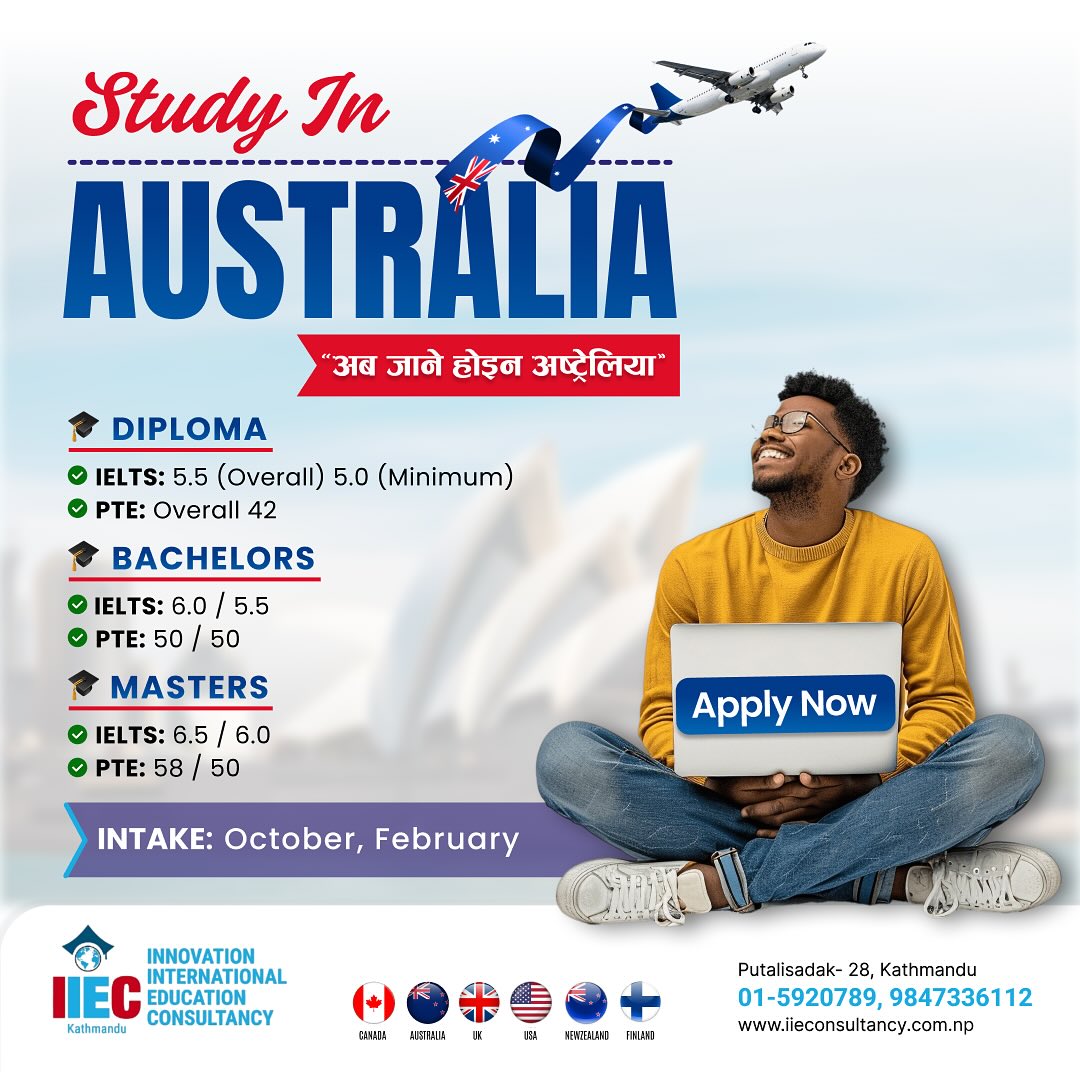
For 2026, the minimum English scores have been raised. To apply for a Subclass 500 visa, you generally need:
- IELTS: 6.0 overall (for University/Higher Education)
- PTE Academic: 50 overall
- Note: Some Foundation or ELICOS (English) programs may allow lower scores, but a higher score significantly strengthens your profile under Level 3 scrutiny.
3. Prepare Your Financial Evidence (The 2026 Standard)
Because Nepal is now Level 3, “hand-wave” financial claims no longer work. You must provide documented proof of funds for your first 12 months of stay.
- Annual Living Cost: AUD 29,710 (Approx. NPR 32–34 Lakhs).
- Tuition Fees: First year’s fee (Varies by course).
- Travel Costs: AUD 2,000.
- Acceptable Sources: 3-6 months of bank history, education loans from “A” class commercial banks, or verified income from sponsors (salary, business, or land lease).
4. The Genuine Student (GS) Requirement
In 2024, the GTE was replaced by the Genuine Student (GS) Requirement. This is a series of targeted questions where you must prove:
- Why you chose this specific course and university.
- How this study aligns with your previous education and future career in Nepal.
- Your incentive to return home after your visa expires.
- Tip: Avoid copy-pasting SOPs. Under Level 3, case officers look for personalized, logical narratives.
5. Lodge Your Visa via ImmiAccount
Once your documents are ready, the application is submitted online:
- Create an ImmiAccount: Visit the Department of Home Affairs website.
- Upload Documents: Scan your CoE, OSHC, Financials, GS Statement, and Academics.
- Pay the Fee: The visa application fee is AUD 1,600 (as of current 2026 rates).
- Biometrics & Medicals: After lodging, you will receive a letter to visit VFS Global in Kathmandu for biometrics and an approved panel doctor for your medical exam.
6. Current Processing Times
Under the new priority processing (Ministerial Direction 115), applications for University sectors are processed faster. However, due to Level 3 manual checks, expect a timeline of 4 to 8 weeks.
Why Choose IIE Consultancy for Your Australia Visa?
Navigating Level 3 requirements can be stressful. At IIE Consultancy, we specialize in:
- Technical Financial Audits: Ensuring your bank documents meet Australian standards.
- GS Statement Mentorship: Helping you craft a unique story that gets approved.
- Interview Prep: Professional coaching for university or embassy interviews.
Ready to start your journey? Contact us today for a free assessment!
recent post

Part time work while studying Australia Nepali students
20 Apr 2026

Top SOP Writing Service in Nepal for Study Abroad (2026 Guide)
20 Apr 2026

The ‘Third Culture’ Identity: “Who am I now? Navigating the ‘identity shift’ that happens when you live between two cultures.
16 Apr 2026
services
Career Counseling
Travel Assistance
Admission Guidance